

Explore London's potential as a global hub for quantum innovation
London's quantum ecosystem in numbers
up to £2bn in public funding for quantum
company headquarters in London, a strong client pool
universities provide London with world-class talent
in venture capital investment across all sectors in London in 2025
Why is London a standout city for quantum companies?
Anchored by world-leading institutions, supported by the UK Government’s Modern Industrial Strategy and backed by up to £2bn in public spending,[1] London is accelerating the transition from quantum discovery to deployment.
London already connects quantum innovation with real life use, in sectors such as finance, telecommunications, healthcare and advanced computing, with large end-user markets and the conditions for commercialisation.
In this rapidly maturing quantum ecosystem, London’s strengths in research, capital, infrastructure and market demand combine to make it a leading location for quantum commercialisation and deployment.
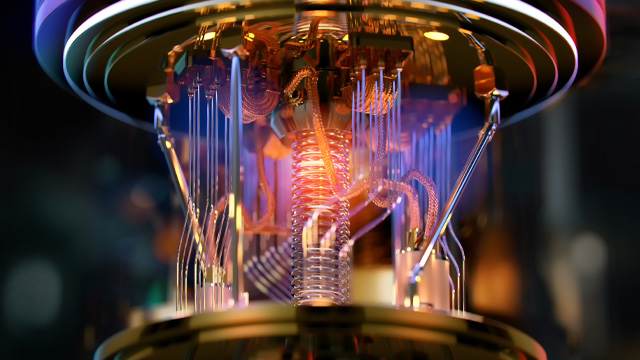
How are quantum technologies being applied?
Quantum technologies are already being applied across four key areas:
- Healthcare and life sciences: enhancing imaging and simulation to enable more precise diagnosis and accelerate drug discovery.
- Secure communications and cryptography: protecting systems and data from unauthorised access, cyberattacks and data theft.
- Timing and navigation: enabling highly accurate, GPS-independent systems through technologies such as quantum clocks.
- Advanced computing: solving complex optimisation and simulation problems significantly faster than classical computers.
London's six quantum pillars
The following six pillars outline London’s key capabilities and structures within the global quantum landscape.
1. World-class research and standards leadership
- Leading research base: anchored by institutions such as University College London, Imperial College London, King’s College London, Royal Holloway, University of London, the London Centre for Nanotechnology and the National Physical Laboratory (NPL).
- Clustered excellence: formation of the London Quantum Cluster (2025) strengthens collaboration across academia, industry and government.[2]
- Standards leadership: NPL plays a central role in UK and international quantum standards, positioning London as a global authority in measurement and interoperability.
2. Dense, high-value markets for quantum adoption
- Concentration of enterprise headquarters: more than 8,000 head offices across finance, tech, defence, energy and professional services create demand for quantum solutions.[3]
- A hub for life sciences applications: London hosts Europe’s largest life sciences cluster with more than 1,400 companies[4] and 260,000-plus employees,[5] creating opportunities for quantum computing in drug discovery and molecular simulation.
- Concentration of healthcare applications: London is home to more than 100 hospitals and provides a testbed for quantum healthcare applications.[6]
- Global financial hub: areas like Canary Wharf and the City of London drive use cases in optimisation, risk modelling and secure communications. The London Quantum-Secured Metro Network is the UK's first commercial quantum key distribution (QKD) network launched by BT and Toshiba. It uses quantum technologies to provide secure data transmission between Canary Wharf and Slough.[7]
- Cybersecurity demand: large-scale need for post-quantum security across more than 1 million small and medium enterprises and thousands of tech businesses.[8]
3. Deep and globally competitive talent pool
- World-leading education base: more than 40 universities and a highly educated workforce[9] (nearly 60% with higher education qualifications).
- Quantum talent pipeline: programmes such as Centre for Doctoral Training at UCL are investing in the next generation of quantum researchers.[10]
- International talent magnet: visa routes and global reputation attract leading researchers and engineers.
4. Access to funding and investment
- Global investment hub: one of the world’s top destinations for foreign direct investment, with strong international capital flows.[11]
- Dedicated funding: access to specialised funds (eg quantum-focused venture capital) and national programmes supporting scaleup and adoption.[12]
- Venture capital (VC) and growth capital strength: London dominates UK venture funding and is a top global tech investment hub. In 2025 London attracted £13.35bn in VC, almost 75% of the UK's VC investment.[13]
5. Strong policy, regulation and national backing
- National commitment: supported by the UK’s long-term investment in quantum through programmes like the UK National Quantum Technologies Programme.[14]
- Stable regulatory environment: a stable legal and business framework according to the Global Competitiveness Report by the World Economic Forum.[15]
- Emerging quantum policy framework: development of standards, regulatory sandboxes and frameworks supported by the Department for Science, Innovation and Technology.[16]
6. Gateway to the UK and global quantum ecosystems
- Golden Triangle advantage: strong links with the Oxford and Cambridge ecosystems.
- UK-wide connectivity: collaboration with centres such as the National Quantum Computing Centre and regional quantum hubs (eg Bristol).[17]
- International partnerships: UK-led agreements with the US,[18] Japan[19]and Germany to expand collaboration, funding and market access.[20]
London offers a unique combination of world-leading research, global capital markets, progressive regulation and immediate access to commercial end users. This environment enables quantum companies to move faster from experimentation to scalable deployment, positioning London as a critical node in the global quantum economy.
Unlock London's unique opportunities
- GOV.UK
- London Quantum Cluster
- Dealroom.co
- Dealroom.co
- MedCity
- Care Quality Commission
- BT
- London's Business Support Strategy, London & Partners
- Times Higher Education
- UCL
- House of Commons Library
- The 2026 European Deep Tech Report [PDF 17.3 MB]
- Dealroom.co
- National Quantum Computing Centre
- Global Competitiveness Report
- ICO
- UK National Quantum Technologies Programme
- US collaboration
- UK Research and Innovation
- UK Research and Innovation